Birmingham City Centre Property Market Update: What Landl...
Birmingham city centre’s residential market has moved into a more selective phase during the first half of 2026. Demand for well-located ...


Over the last two decades, Birmingham’s key neighbourhoods have been shaped by the ‘Big City Plan’, a huge endeavour that has transformed not only the skyline but the way that people look at the city.
It was this plan that directly led to key developments such as the Midlands Metro, Library of Birmingham, Arena, Paradise and the Bullring being built, all of which are often cited as key contributors to the better quality of life and standard of employers entering the city since 2000.
At the same time, Birmingham’s rental sector has flourished thanks to the ‘Big City Plan’. With more people wanting to live in the city, buy-to-let investors have found success with city-centre apartments in key areas such as the Jewellery Quarter, Digbeth and the city core.
Even now, investors continue to flock to key destinations across the city and as we enter the next phase of the Big City Plan, there’s a broad range of new opportunities available across the city.
Following the success of the ‘Big City Plan’, Birmingham City Council quickly moved forward with an extension of the plan named ‘Our Future City’.
Established in 2024, ‘Our Future City’ is a project aimed at continuing to revitalise key areas across Birmingham over the next 20 years, providing more job roles, improved public transport, affordable new homes and better green spaces.
Fundamentally, the objective of the plan is to group together five distinct areas and drive projects that improve each of these areas, ensuring they all have the necessary infrastructure to succeed whilst maintaining their own individual character. In this way, Birmingham will have distinct neighbourhoods, emulating cities such as London where destinations are inter-connected and provide their own value offering.
The five areas are:
City Heart: Bullring, Colmore Business District, Snowhill and Steelhouse, Southside, Town, Westside.
Central North: Eastside, Aston Triangle, Gun Quarter, Nechells, Newtown.
Central East: Bordesley, Digbeth, Small Heath.
Central South: Balsall Heath, Edgbaston, Highgate
Central West: Hockley, Jewellery Quarter, Ladywood, Spring Hill, North Edgbaston
These groups make it much easier for the council to deliver larger schemes and encourage focused investment, improving infrastructure and creating places that people want to visit.
One of the key areas we’re focusing on at the moment is Central East – and in particular – Digbeth.
This area is seeing a huge amount of investment at the moment, built on the back of a thriving creative sector, larger ongoing projects such as HS2 Curzon and a young professional workforce looking for both accommodation and new experiences.
While areas such as the City Heart and Central West (especially the Jewellery Quarter) have already seen huge amounts of investment in new residential spaces and amenities, it seems like the immediate future is all about Digbeth and Bordesley, with new projects being announced on a seemingly daily basis.
Although we’ve already spoken about why Digbeth is one of the most exciting places to live, today we’re walking through future investment plans in the area and why Digbeth might be the best place to invest in Birmingham.
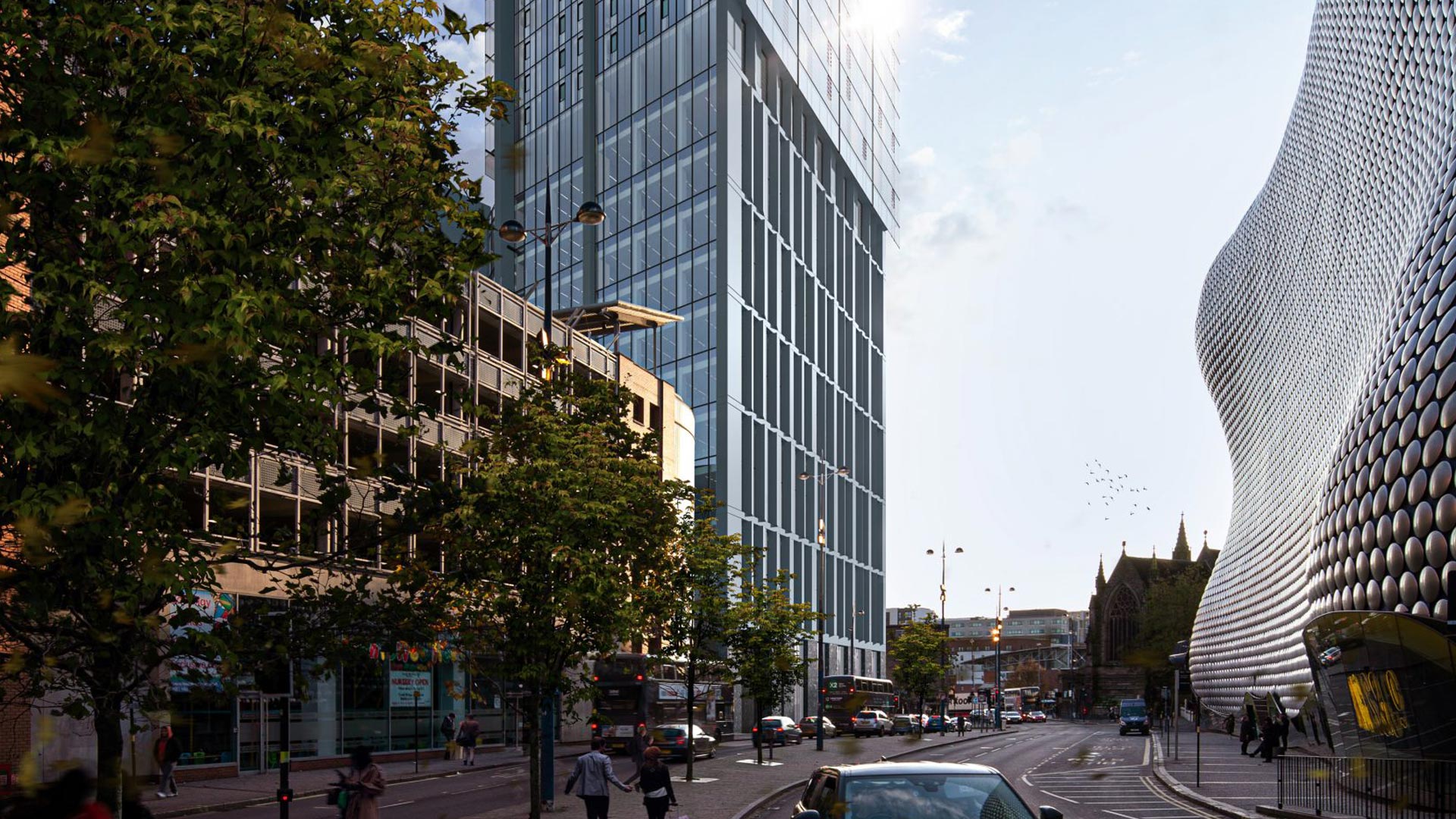
If we’re looking at Digbeth specifically, the first port of call is the Digbeth Prospectus, a new report published in 2025 that looks at the vast range of future investment the area is expected to see by 2045.
Comprising around 10 developments over 35 separate plots, the Digbeth Prospectus lays out proposals for over 6,500 homes, 310,000 sq.m of commercial space and an array of retail, office and leisure amenities as part of more focused projects.
While these proposals are in various stages of delivery, the majority are located in and around the HS2 Curzon Street station, the Eastside Metro expansion, Digbeth High Street or the Custard Factory.
Below are some of the key investment projects coming up in Digbeth:
Whilst they’ve been in the works since 2020, plans to transform the Custard Factory worth over £1 billion have finally been approved and are set to go ahead as part of the larger ‘Our Future City’ scheme.
Developed by Oval, the plans lay out a huge mixed-use scheme in and around the legendary Custard Factory that spans nearly 19 hectares, with permission currently in place for around 147,000 sq.m of commercial space and over 500 new homes.
The first phase is ‘Wild Works’, several new buildings that will provide new office space, an ‘incubator workspace’ for start-ups and new businesses as well as a new restaurant.
Wild Works is followed up by an expansion of the Custard Factory rooftop which will add three additional storeys to the building and deliver a new green space alongside open-plan offices.
Finally, the Custard Factory Living scheme is the first set of residential accommodation to be provided as part of the wider framework and will create 40 new homes, retail spaces and connect to the wider Custard Factory by a bridge over the River Rea.
Outside of these key schemes, the proposal also lays out ‘new retail, hotel, leisure and commercial opportunities’ set to be fully established in the future.
One of the more recent developments to be approved is the redevelopment of the old Phoenix Ironworks site in Digbeth, a 2.8-acre brownfield space right next to Digbeth High Street.
The plans are extensive and lay out nearly 260,000 sq.ft of ‘media, education and commercial space alongside 240 new homes’. This would be a huge boost for an area that is already recognised for the strength of its creative media and educational sectors, creating a new destination within the local area.
With other huge projects such as Typhoo Wharf HQ and the Smithfield Masterplan also nearby, Phoenix Ironworks would be a fantastic addition to the Central East area.
Located in the north of Digbeth, Typhoo Wharf is an exciting redevelopment of the old Typhoo Tea Factory, one of the more recognisable landmarks in the area.
The plans for the area are extensive, utilising a phased approach to deliver improved connectivity, new landscaped public areas, around 800,000 sq.ft of residential and commercial space over the next decade and, perhaps most importantly, a brand new, purpose-built headquarters for the BBC.
Work has already begun on site, and it’s expected that Typhoo Wharf will help bolster Digbeth’s thriving creative community, ensuring plenty of new roles whilst invigorating the local economy.
Encompassing both investments in the City Heart and Central East areas, the Digbeth Gateway is improving areas in and around the Bullring, Smithfield and Digbeth High Street.
Projects such as Beorma Quarter, which also incorporates Beorma itself, are great examples of the regeneration occurring across the ‘Digbeth Gateway’, set to deliver new commercial space, luxury residential accommodation, retail and leisure facilities.
Just a stone’s throw away from larger projects such as HS2 Curzon Street and Smithfield, the projects around this area will help establish Digbeth as a new destination for living, working and playing.

Birmingham city centre’s residential market has moved into a more selective phase during the first half of 2026. Demand for well-located ...

When FleetMilne became sponsors of the Birmingham Business Best Places to Work Awards 2026, one thing quickly became clear: our Managing ...

It’s a question many buyers are asking again: Is now a good time to buy property? After a period dominated by rising interest


